R U OK? Day: The Question Doctors Often Struggle to Answer
Most doctors are good at checking in on other people.
We ask patients difficult questions every day. We notice subtle changes, identify when someone is struggling, and provide support during some of life's most challenging moments.
But many of us find it much harder when the attention turns to our own wellbeing.
“How are you?”
“Are you okay?”
For many doctors, the automatic response is “I’m fine” even when the reality is much more complicated.
Medicine is a profession that attracts capable, caring and resilient people. We learn to manage pressure, solve problems and continue functioning when things are difficult. These qualities help us provide excellent care, but they can also make it harder to recognise when we need support ourselves.
Research has consistently shown that doctors experience significant psychological distress. The National Mental Health Survey of Doctors and Medical Students found that approximately one in four Australian doctors had experienced suicidal thoughts before the previous 12 months, while around one in ten reported suicidal thoughts during the preceding year. The survey also identified important barriers to seeking help, including concerns about confidentiality, embarrassment and potential impacts on medical registration.¹
R U OK? Day reminds us of the importance of checking in with friends, family and colleagues. But it is also an opportunity to reflect on how we respond when someone asks us that question. 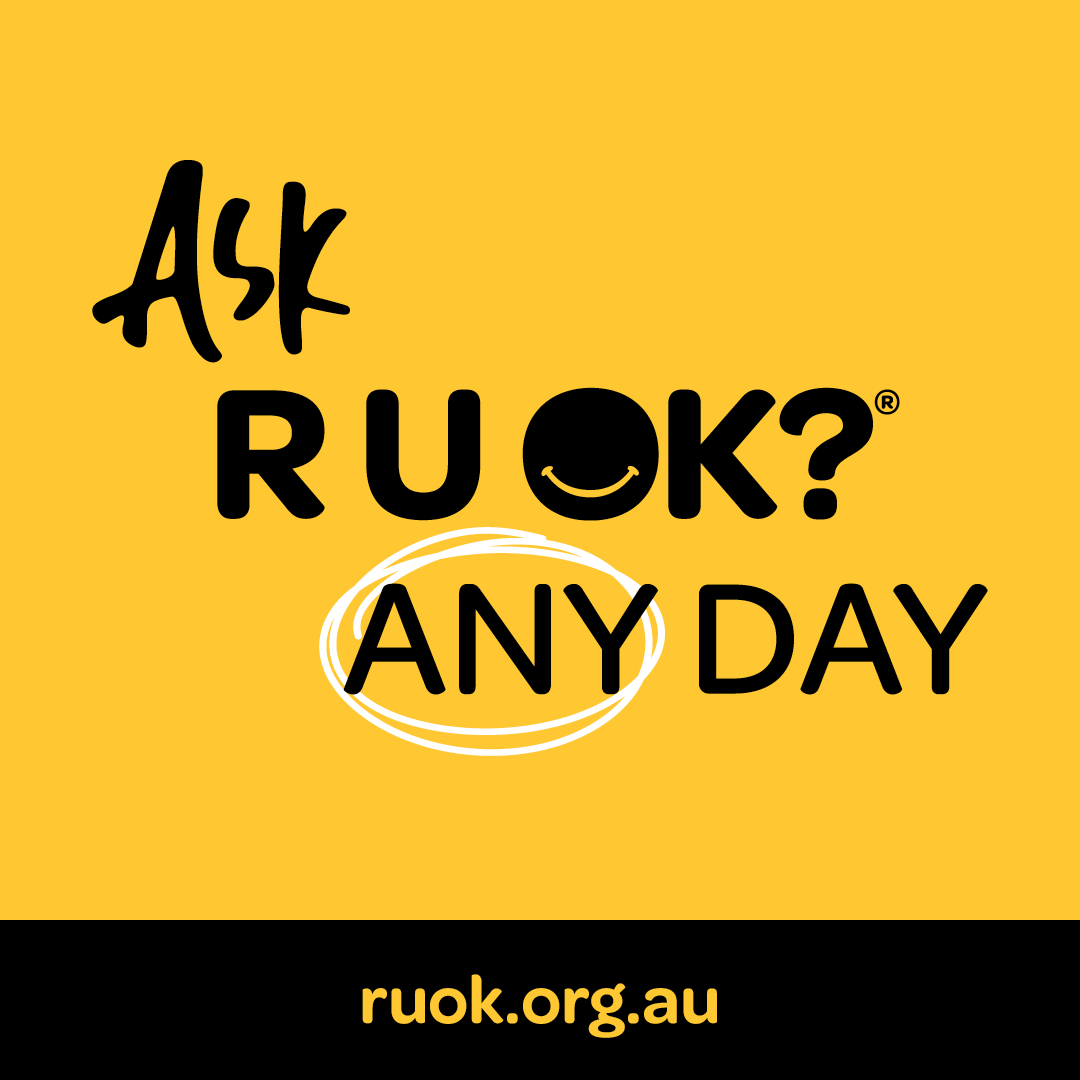
Being okay does not mean never feeling stressed, overwhelmed or exhausted. It does not mean coping perfectly all the time. It means recognising when something is affecting us and being willing to seek support when we need it.
Some doctors worry that seeking treatment for a mental health concern could place their registration at risk. However, having a mental health condition, or receiving treatment for one, is not in itself a reason for notification to Ahpra or the Medical Board of Australia. The threshold for mandatory notification by a treating practitioner is deliberately high and is intended to give practitioners confidence to seek care without fear that treatment alone will lead to regulatory action. The regulatory focus is on protecting the public from substantial risk of harm, not on penalising doctors for seeking appropriate healthcare.²˒³
Australian regulatory research also includes examples of doctors receiving treatment for mental health conditions where no further action was taken because there was no identifiable risk to the public. In one published example, the doctor was receiving ongoing treatment, taking leave when needed and following treatment recommendations.⁴
This year, if a colleague asks how you are, consider whether your answer reflects how you are really feeling.
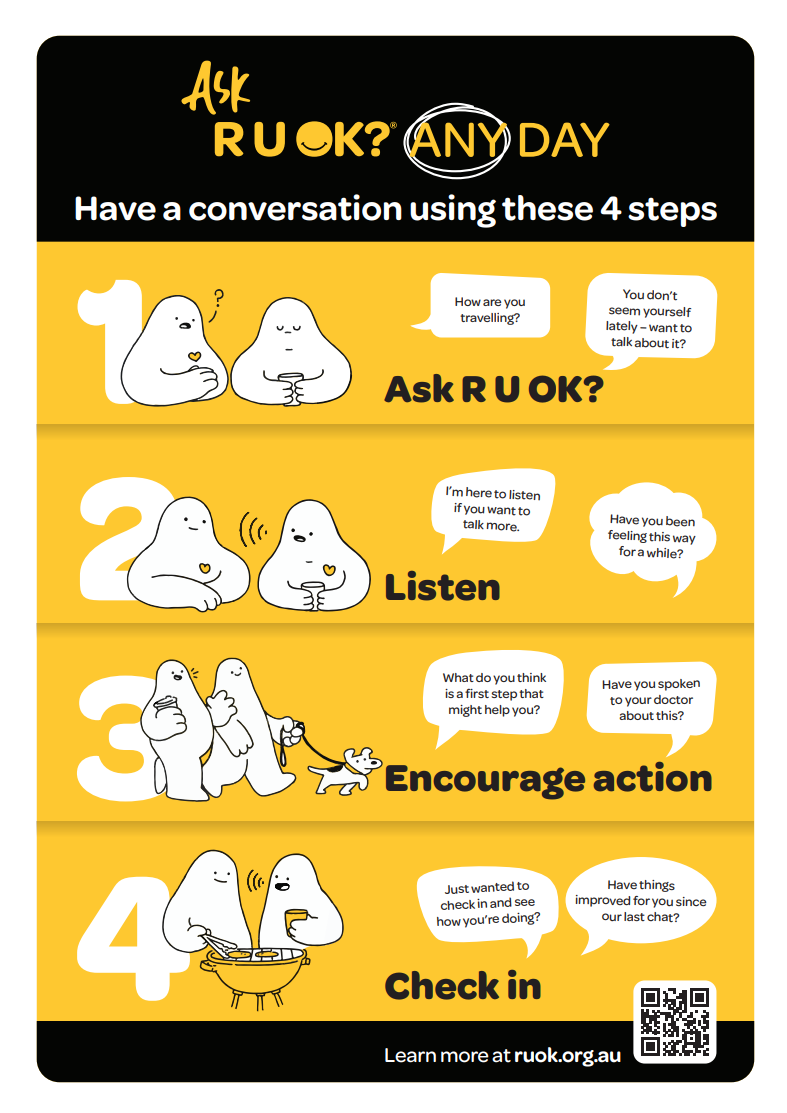
And if someone shares that they are struggling, remember that you do not need to solve the problem. Often the most valuable thing you can offer is your time, your attention and your willingness to listen.
As doctors, we spend our careers caring for others. R U OK? Day is a reminder that we deserve the same compassion we readily extend to our patients and colleagues.
Because sometimes the most important conversation starts with a simple question and an honest answer.
If you are finding things difficult, consider reaching out to your GP, a trusted colleague, a mentor or Drs4Drs. Seeking appropriate treatment is a responsible step towards protecting your health, wellbeing and the care you provide. A mental health diagnosis is not the same as an impairment affecting your capacity to practice safely, and treatment itself is not grounds for mandatory notification. Getting help early, following treatment recommendations and seeking support when needed are positive ways of maintaining both your health and your professional practice.²–⁴
Need to talk? Please reach out to the confidential 24/7 doctors’ health line – 1300 DR4DRS (1300 374 377) or visit our website www.drs4drs.com.au
Dr Kate Reid – Lead Practitioner Drs4Drs National
If you would like to read more about R U Ok? Day, click here.
References
2. Australian Health Practitioner Regulation Agency. Making a mandatory notification.
3. Medical Board of Australia. Guidelines for mandatory notifications.
4. Bismark MM, Hettiarachchi D, Fletcher M, Bradfield O, Tayal A, Taouk Y. Health Impairment Notifications About Doctors to the Australian Medical Regulator, 2012–2022: A Retrospective Cohort Study.
5. Avant Mutual. Mandatory reporting: still a barrier to treatment for mental health. 10 July 2025.
Note: This article provides general information and is not legal advice. Practitioners should consult current Ahpra and Medical Board guidance or obtain individual advice where needed.